614.918.0050
 Westerville, OH
 614.918.0050
 Westerville, OH


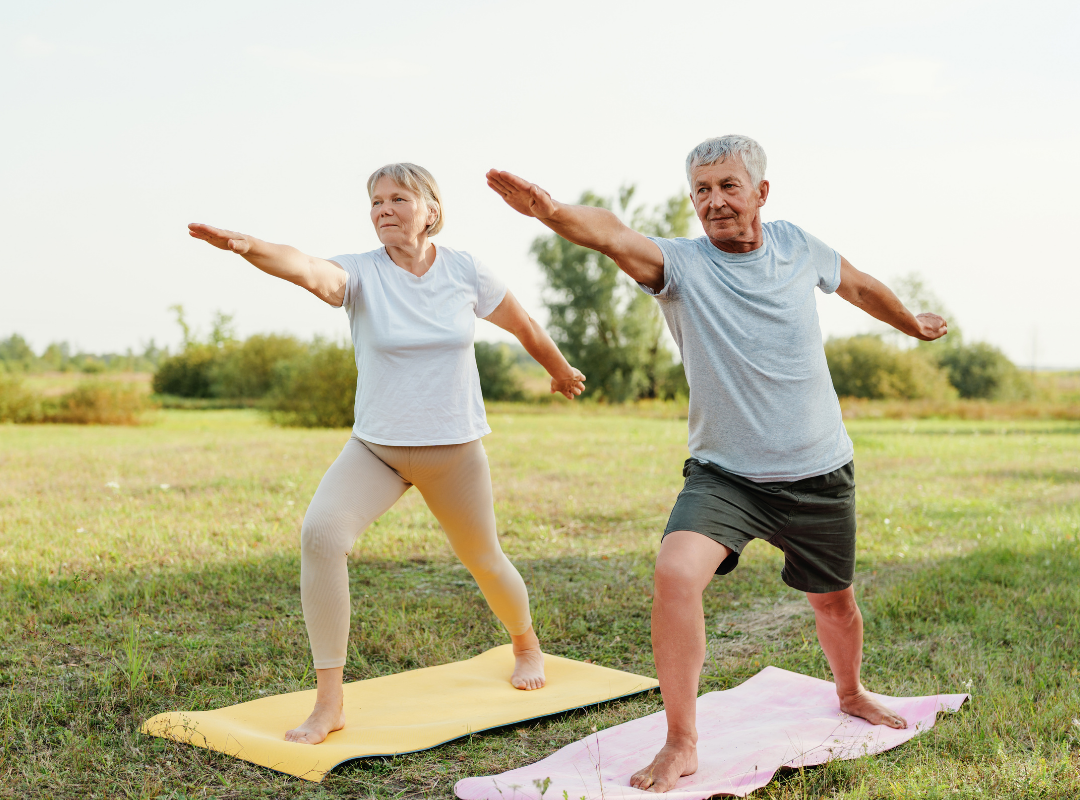
Yoga poses for seniors can be simple, supported movements performed while seated or standing near a sturdy chair. A gentle practice may support balance, mobility, body awareness, and relaxation without requiring advanced flexibility or getting onto the floor. The right poses depend on your comfort, health needs, and level of support.
If you are new to yoga, begin slowly and choose movements that feel steady and manageable. At The Gables of Westerville, yoga classes are among the activities available to residents. Below, you will learn how to select senior-friendly poses, adapt movements, and decide whether independent or guided practice feels right for you.
What Makes a Yoga Pose Senior-Friendly?
A senior-friendly yoga pose uses slow, controlled movement that can be adjusted with a chair, wall, or other stable support. The best pose matches your mobility, balance, comfort, and health needs. It should not require you to reach a fixed position or copy someone else’s range of motion.
Gentle yoga may include chair-based movements, supported standing positions, mat-based poses for people comfortable with floor transfers, and breathing or relaxation practices. A pose should allow you to breathe normally and stop easily. “Gentle” describes how the movement feels to you, not simply what the pose is called.
Gentle Yoga Poses for Seniors to Try With Support
These yoga poses for seniors focus on stable positions and controlled movement. Use a sturdy chair that does not roll or slide, and stay within a comfortable range. Stop and seek guidance if you feel pain, dizziness, numbness, unusual weakness, shortness of breath, or instability.
Seated Mountain Pose for Posture and Body Awareness
Sit with both feet supported on the floor and your hands resting comfortably. Lengthen your spine without becoming stiff, let your shoulders relax, and breathe at a natural pace. This is a helpful starting pose because it gives you time to notice your posture, breathing, and comfort before adding movement.
Seated Side Reach for Gentle Upper-Body Mobility
Keep both feet grounded and lift one arm only as high as feels comfortable. Lean slightly to the opposite side without twisting or collapsing forward, then return to the center and repeat on the other side. Make it gentler by keeping your raised hand on your shoulder or lifting it only partway.
Seated Cat-Cow for Controlled Spinal Movement
Sit upright with your hands on your thighs. Gently round your upper back, then slowly lift your chest and return to a comfortable upright position. Keep the movement small and controlled. If you have scoliosis, osteoporosis, recent surgery, ongoing back pain, or another spinal condition, ask a qualified healthcare professional whether repeated spinal bending is suitable for you.
Seated Knee Lift for Hip and Core Engagement
Sit securely and hold the sides of the chair if needed. Slowly lift one knee a small distance, lower it with control, and repeat on the other side. The goal is steady movement and coordination, not lifting the knee as high as possible.
Supported Heel Raises for Lower-Leg Stability
Stand behind a sturdy chair with your hands resting lightly on the back. Slowly raise your heels, pause if comfortable, and lower them with control. Keep your body upright and avoid pulling on the chair. A smaller lift is a good option if you feel uncertain.
Supported Mountain Pose for Standing Confidence
Stand near a wall or sturdy chair with your feet comfortably apart and your knees relaxed. Notice how your weight is shared between both feet while keeping support within reach. Return to a seated position if standing feels tiring or unsteady.
The National Center for Complementary and Integrative Health reports that yoga may support general wellness and balance, although yoga styles and research methods vary. It also advises older adults and people with health conditions to discuss individual needs with their healthcare provider and yoga instructor because some poses may need to be modified or avoided.

Which Pose Should You Choose? Match the Movement to Your Goal
The best yoga pose is not necessarily the most advanced one. Choose a movement by matching three factors: your goal, your starting position, and the level of support you need.
| Your goal or concern | Possible starting movement | Support option | What to consider |
| Feeling calmer | Seated mountain with slow breathing | Supportive chair | Keep your breathing easy and natural |
| Gentle upper-body movement | Seated side reach | Firm chair | Do not force your shoulder overhead |
| Practicing posture awareness | Seated mountain | Chair with back support if needed | Upright should feel comfortable, not rigid |
| Building standing confidence | Supported mountain pose | Wall or sturdy chair | Stay seated if balance feels uncertain |
| Exploring gentle spinal movement | Seated cat-cow | Stable chair | Ask for guidance if you have a spinal condition |
| Engaging the lower legs | Supported heel raises | Chair or counter | Stop if you feel unstable |
Your needs may also change from day to day. A supported standing pose might feel comfortable one morning, while a seated movement may be a better choice when you are tired. Adjusting your practice is a sensible response to how your body feels, not a step backward.
Chair Yoga, Standing Yoga, or Mat Yoga: Which Is the Better Starting Point?
Chair yoga is often the easiest starting point for older adults who are new to yoga, feel uncertain while standing, or prefer not to move down to the floor. Standing and mat-based yoga can also be appropriate, but each format asks different things of your balance, joint comfort, and mobility.
Chair Yoga May Be the Most Accessible Entry Point
Chair yoga provides a stable base and can make it easier to focus on breathing and controlled movement. It may suit you if standing for an extended period feels tiring or if getting down onto the floor is uncomfortable. The chair should be firm, stable, and free of wheels.
Supported Standing Yoga Adds a Balance Component
Standing poses may help you practice body awareness and weight distribution when you can stand securely. Keep a wall, counter, or chair nearby. Unsupported balancing is not required, and you should sit down if you begin to feel tired or uncertain.
Mat Yoga Requires Additional Mobility and Floor-Transfer Ability
Mat-based poses may work for older adults who can safely lower themselves to the floor and rise again. Before choosing this format, consider your knees, hips, wrists, back comfort, and ability to change positions. Practicing with a qualified instructor may be helpful if you are unsure about floor transfers.
Choosing the right format matters because accessibility can affect whether you feel confident enough to continue. Think about how safely and comfortably you can enter, hold, and leave each position.
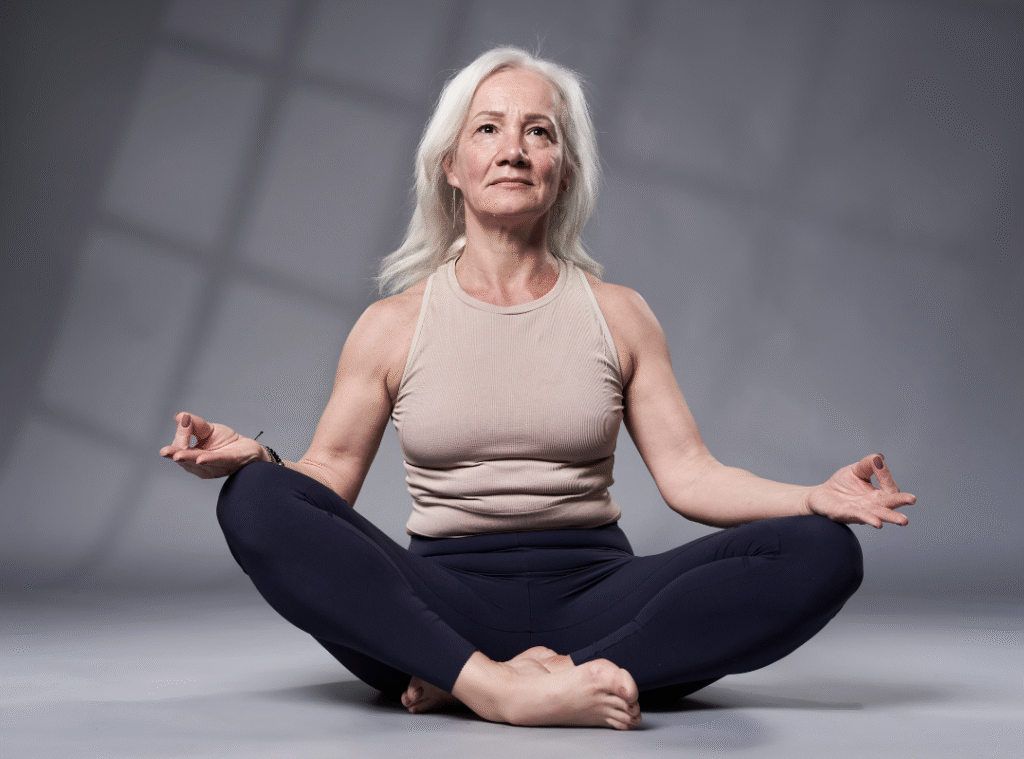
A Simple Five-Minute Yoga Routine for Older Adults
A beginner routine can be brief. Start seated, use slow movements, keep support nearby, and stop before discomfort, fatigue, or instability affects your form.
Try this simple sequence:
- Seated mountain pose: Sit comfortably and take several natural breaths.
- Shoulder movement: Slowly lift and lower your shoulders without forcing them backward.
- Seated side reach: Reach gently to each side while keeping both feet grounded.
- Seated cat-cow: Use a small range of motion if the movement is appropriate for you.
- Quiet breathing: Return to a comfortable seated position and let your shoulders relax.
You do not need to hold each position for a strict amount of time. Several calm breaths may be enough. Stop before the movements feel strained or unsteady.
For more gentle movement ideas, explore seven exercises for seniors with back problems. Choose exercises carefully if you have back pain or a diagnosed condition, and seek professional guidance when needed.
How to Practice Yoga More Safely as You Age
Safe yoga practice begins with a stable setting and movements that respect your current abilities. The National Institute on Aging’s guidance on exercise and physical ability identifies yoga as one form of balance activity and advises using support when needed.
Before you begin:
- Use a sturdy chair on a clear, non-slip surface
- Move slowly between sitting and standing
- Keep any needed support within easy reach
- Breathe normally and avoid forcing a position
- Do not compare your movement with another person’s
Stop if you experience sharp pain, dizziness, unusual weakness, numbness, tingling, shortness of breath, or a loss of balance. Speak with an appropriate healthcare professional before starting if you have had a recent injury or surgery, significant balance problems, recent falls, a diagnosed spinal or neurological condition, or movement restrictions.
Balance concerns deserve attention. Current data from the Centers for Disease Control and Prevention show that more than 14 million adults age 65 and older, about one in four, report falling each year. This does not mean yoga alone will prevent falls, but it shows why stable support and appropriately selected movement matter.
Yoga is a complementary wellness activity. It should not replace medical care, rehabilitation, physical therapy, or instructions from a healthcare professional.
Beyond Flexibility: How Yoga Can Fit Into a Senior Wellness Routine
Yoga is often associated with flexibility, but a gentle practice may also involve breathing, body awareness, posture, controlled movement, balance practice, and relaxation. These elements can make yoga a useful part of senior fitness programs when the movements are matched to the participant.
A well-rounded routine may combine yoga with aerobic movement, strength exercises, balance practice, mobility work, relaxation, and enjoyable social activities. The National Institute on Aging’s overview of physical activity benefits explains that older adults can benefit from aerobic, muscle-strengthening, and balance activities.
Enjoyment also matters. A routine that feels approachable is easier to return to than one that feels like a test. Your yoga practice might consist of several chair movements, a supported standing pose, and a few calm breaths.
Why Guided Yoga and Shared Activities Can Make Practice Easier
Knowing the name of a pose is different from feeling confident enough to try it. A guided senior fitness setting may provide clearer instructions, nearby support, modifications, and a predictable routine. It can also make one feel more social and enjoyable.
When exploring a yoga class or senior fitness program, ask practical questions:
- Is the class designed for older adults?
- Are seated alternatives available?
- How are different mobility levels accommodated?
- Can you observe before joining?
- Who should you speak with about personal movement restrictions?
Families sometimes focus only on whether a community offers yoga. What often matters more is whether the activity can be adjusted and enjoyed at the participant’s current ability. The right setting should make it easier to ask for help or choose a different movement without feeling pressured.
If you are thinking about how activities, social opportunities, and daily routines fit your preferences, the Lifestyle Assessment may help you consider which senior living setting aligns with the way you would like to spend your time.
Explore Active, Engaging Senior Living at The Gables of Westerville
Gentle movement is one part of a fulfilling routine. The Gables of Westerville offers yoga classes along with book club, art classes, interactive lectures and presentations, Friday happy hour, Sunday movie or musical matinees, and outings to local museums and restaurants. Residents also have access to dining and on-site transportation.
The community provides Independent Living, Assisted Living, and Memory Care. If you would like to see how wellness activities and everyday life come together, plan a visit to The Gables of Westerville. You may also contact the community or call 614-918-0050 to ask about yoga classes, activities, services, or living options.
Frequently Asked Questions
Which yoga is best for seniors?
Gentle yoga that can be adapted to your mobility, balance, and comfort is usually the most suitable option. Chair yoga may be a practical starting point if you prefer seated support or do not feel comfortable getting onto the floor. Supported standing yoga may work when you can stand securely near a chair or wall. Your health needs and professional guidance should shape the final choice.
What yoga poses help scoliosis?
There is no single set of yoga poses that is appropriate for everyone with scoliosis. The type of curve, symptoms, age, treatment history, and other health factors can affect which movements are suitable. Breathing, posture, or mobility exercises may be included in an individualized plan, but yoga should not be presented as correcting scoliosis. Ask a healthcare professional or physical therapist familiar with your condition before trying spinal stretches or repeated bending.
Can yoga help lower cortisol?
Yoga may support relaxation and stress management for some people, but it cannot be guaranteed to lower cortisol. Cortisol levels are affected by sleep, illness, medication, physical activity, and many other factors. Gentle breathing and movement may help you feel calmer without providing a specific hormonal result. Speak with a healthcare professional if you have concerns about ongoing stress symptoms or hormone levels.
Can yoga help with nerve damage?
Yoga does not repair nerve damage. Gentle movement may be included in some professionally guided care plans, depending on the cause, location, and severity of the condition. Numbness, tingling, burning pain, weakness, or balance changes should be medically evaluated before you begin. Certain stretches or positions may not be appropriate for the affected nerve or underlying condition.